Preface
Natural Information Architecture
This is not a book. What does that even mean? On what basis can a written work be excluded? A book can be long or short, physical or digital, published or not. The category is fuzzy. There is no clear boundary. These riddles are fair game in this playful “unbook” on information architecture.
I do not wish to be bound by the rules of a book. That’s why I stake a claim to liminality. This is a work of non-fiction lush with dream and story. It has quotations but no citations, as footnotes inspire false confidence, and it’s easy to look things up. There’s a spiral of contents but no table, since the book is a labyrinth, and our plan is to wander strange loops, not to walk a straight line.
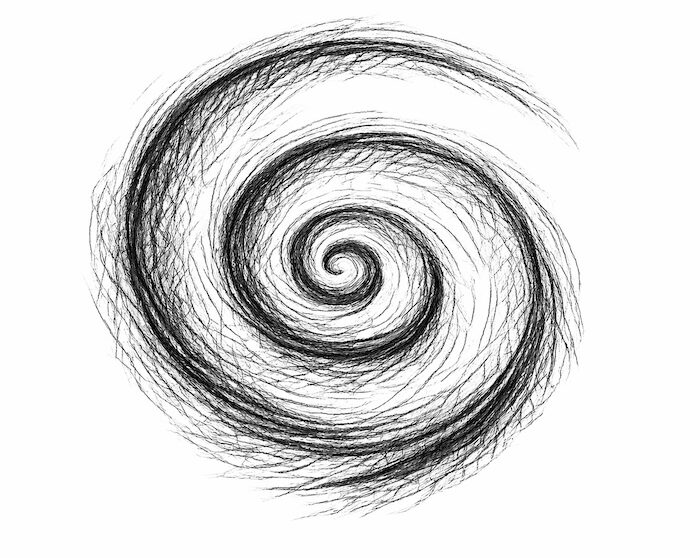
In the early chapters (Story, Order, Nature) we stay close to the core. Our focus is the information architecture of ideas and the design of mental models, with an eye to creative problem solving. As we spin out, we rethink these concepts within the contexts of individual (Identity, Belief, Purpose) and community (Tribe, Trade, Governance). Recursion is a common refrain. Like nesting dolls, insights are unveiled at each turn.
Intelligence, natural and artificial, is a subject of interest. Consciousness is too. So it’s only right to disclose that while the words are written by me, and the cover design is by Jeff Callender, the art in this book is generated by AI, and I use Large Language Models for research and ideation.
This makes me uncomfortable. But in the flatlands of modernity, we are all complicit. There is no moral high ground. I fear the centre cannot hold, but I can’t walk away. And yet, I do have the courage to bear witness, and so together we shall fight monsters and gaze into the abyss.
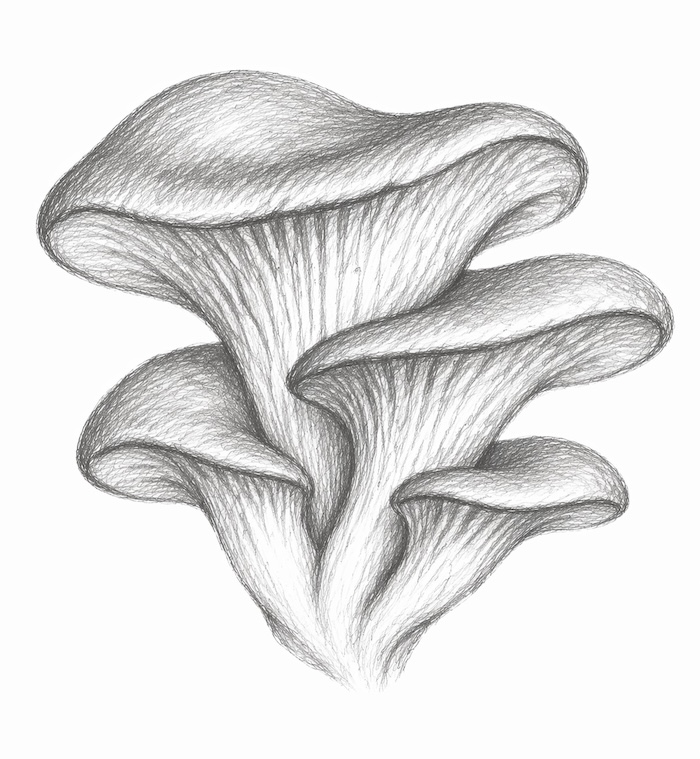
But not for long. The spirit of this book is not sad but sassy, since the way to overthrow a taxonomy is with laughter and a guitar. So on this odd-yssey, the mushroom is our hallucinogenic spirit animal, and emancipating information architecture is our redemption song. It goes like this: free your mind of categorical error, to think-feel-act yourself into freebeing, where every little thing gonna be alright.
My father-in-law once surprised me by saying, “I don’t read fiction. If I spend time reading, I want to learn something.” Wut? Me, I find as much truth in fiction as non-fiction and identify the binary as false. I am an old man who loves young adult fiction. As both reader and writer, I refuse to be shackled by genre (or gender), so if fantasy, poetry, or cozy horror slips into this book, don’t be surprised.
I am of an age where who I am is defined by my ability to unlearn. Much of what we are taught is wrong. And many adults are stuck in their ways. I credit my flexibility to the practice of information architecture. I spent my career imagining different ways to organize knowledge. It was my job to re-think, re-frame, and re-model. To be an information architect, it helps to be playful.
I spy with my mind’s I, somethings beginning with C — categorization is the cornerstone of cognition and consciousness, and the categories we build in the world are two-way links, strange connections to categories that make up our minds. To be mindful of IA is a catalyst for creativity.
None of this is obvious. To notice our own mental models and unconscious ontologies calls for uncommon awareness and observation. And that is the goal of this book — to make the invisible visible in service of creativity. This book may trigger an epiphany. But its aim is humble insight. Philosophy is practical. To question the natural order is the answer to creative problem solving.
Our age is liminal. Even the deep layers of governance, culture, and nature are in flux. But old habits die hard. So we need an unbook to unlearn, as it’s that which resists what is that makes the information architecture of the mind matter. All maps are traps, forged by category. Beliefs are hard as a knot, tangled up in taxonomy. And so, our adaptation is subject to metacognition — we must change the story we tell ourselves about natural information architecture.
0 1 2 3 4 5 6 7 8 9 10 11 12 13 14 15 16 17 18
Preface for Natural Information Architecture by Peter Morville